
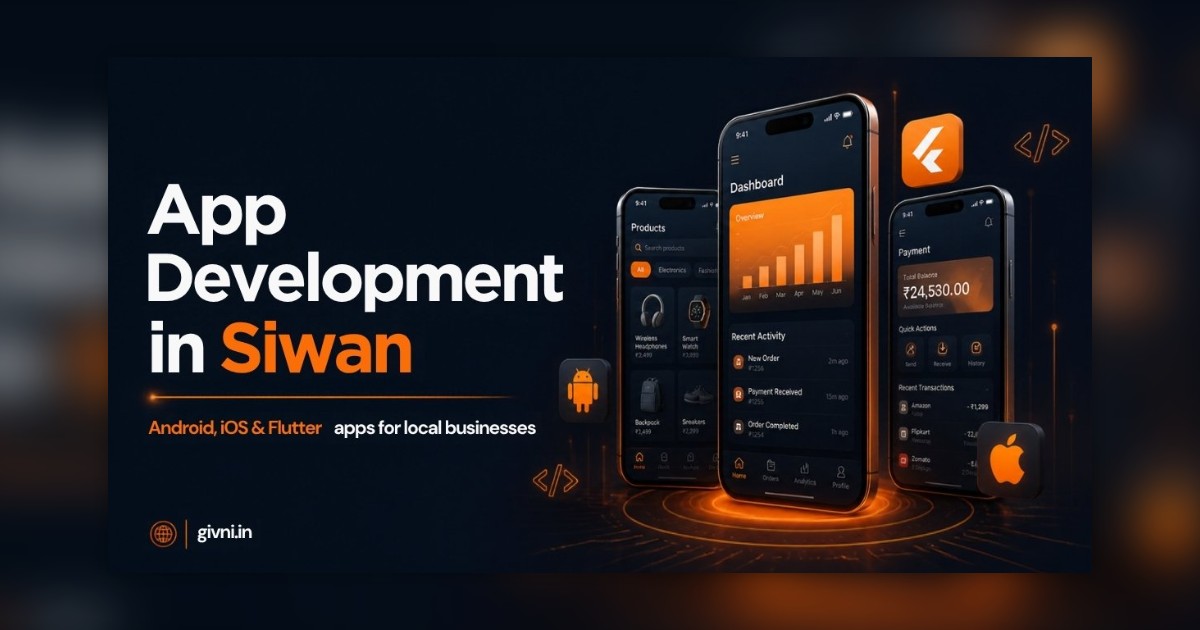
Siwan is a district where many families have members working in other Indian cities or in the Gulf countries, and money sent home plays an important part in the local economy. That reality shapes how people shop, pay for services and stay connected, and it is quietly reshaping app development in Siwan too. Clinics, pharmacies, schools, building-material dealers, jewellers, electronics shops and travel agents are all asking how a mobile app could help them in 2026. This article looks at eight trends that are influencing local business apps this year, and which of them are worth acting on now rather than later.
These trends are based on broad patterns in how Indian small and medium businesses are adopting technology, not on specific statistics. Treat them as a guide for planning, not as predictions.
Why Trends Matter for a District Town
It is easy to assume that technology trends only apply to big cities. In practice, many of them reach district towns quickly because smartphones and UPI are already common. The difference is that small-town businesses can be selective. You do not need to chase every new idea; you need to pick the few that fit your customers.
Eight Trends in App Development in Siwan for 2026
1. Family-linked accounts and remote payments
In remittance-linked households, the person paying is often not the person using the service. A son in another state may pay for his mother's medicines; a husband in the Gulf may want to see his child's school fees and results. Apps that let one account manage or pay for family members, and share receipts instantly, are becoming especially relevant in places like Siwan.
2. Hindi-first and voice-friendly design
More apps are offering Hindi as the default rather than an afterthought, with large buttons, simple words and icons. Voice search and voice notes inside apps are also becoming more common, which helps users who are less comfortable typing.
3. UPI everywhere, with flexible options
UPI is now the expected way to pay for many people, and apps increasingly support UPI links, QR codes and quick payment confirmations. At the same time, successful local apps keep cash on delivery, pay-at-counter and credit accounts for trusted customers, because flexibility builds trust.
4. WhatsApp working alongside the app
Instead of replacing WhatsApp, many business apps now work with it. Order confirmations, reminders and receipts can be sent through WhatsApp messaging, while the app handles catalogues, orders and records. This combination suits customers who use WhatsApp every day but install few apps.
5. Lighter apps and progressive web apps
Because many customers use budget phones with limited storage, there is a clear push towards lighter apps that install quickly and use little data. Some businesses choose a progressive web app, a website that behaves like an app, for their first step. Android app development in Siwan increasingly focuses on speed and small app size rather than heavy visuals.
6. Practical AI features
Artificial intelligence is appearing in small, useful ways rather than as a headline feature: smarter product search that understands spelling mistakes, automatic replies to common questions, suggested reorders based on past purchases, and quick summaries of daily sales for the owner. These should be added carefully and only where they genuinely help, with a human always available when needed.
7. Apps connected to the back office
Owners are realising that an app is most valuable when it connects with billing, GST, stock and customer records. Orders flow straight into invoices, stock updates automatically, and customer details feed into a CRM for follow-ups. Standalone apps that create extra data entry are losing appeal.
8. Privacy and trust as selling points
Customers are more aware of data privacy, especially for health records, children's information and payment details. Clear privacy policies, minimal permission requests, secure login and visible business contact details are becoming part of what makes an app trustworthy.
Which Trends Should You Act On First?
Not every business needs all eight. A simple way to decide:
- Clinics and pharmacies: family-linked accounts, WhatsApp reminders and strong privacy.
- Schools and coaching centres: family accounts for parents working elsewhere, Hindi-first design and fee payments by UPI.
- Retail and jewellery shops: light apps, UPI with flexible payment options and WhatsApp order updates.
- Building-material and hardware dealers: quotations, order tracking and back-office integration.
- Travel agents: enquiry forms, document checklists and updates for customers and their families.
Trends to Treat With Caution
Some ideas sound exciting but rarely pay off for local businesses in the first version: complex gamification, heavy video features without a clear purpose, and AI chatbots that try to replace human conversation entirely. Customers in a town like Siwan often value a quick phone call with someone they know. Keep that human connection visible in your app.
A Simple Way to Test a Trend Before Investing
Before building a trend into your app, try a low-effort version of it first. If you think family members elsewhere would pay for services, start by sending UPI payment links on WhatsApp and see how often they are used. If you think Hindi-first screens will help, ask a few regular customers to try a rough Hindi version of the main screen. If you are curious about AI-assisted replies, note down the ten questions customers ask most often and check whether simple ready answers would cover them. Small experiments like these cost little and tell you which trends deserve a place in your app. This habit of testing before building is one of the most useful lessons in app development in Siwan, or anywhere else.
Planning Your 2026 App
Start by choosing the one problem you most want to solve, then pick the two or three trends that support it. Talk to a mobile app development company that will explain which trends fit your budget and customers, and which can wait. Givni helps businesses make exactly these choices; you can read about our app development in Siwan service to see how we approach local projects.
हिंदी में पढ़ें: 2026 में सिवान के कारोबारी app के नए रुझान
सिवान ऐसा ज़िला है जहाँ बहुत से परिवारों के लोग दूसरे शहरों या खाड़ी देशों में काम करते हैं और घर पैसा भेजते हैं। इसका असर इस पर भी पड़ता है कि लोग ख़रीदारी कैसे करते हैं और भुगतान कैसे होता है। क्लिनिक, दवा दुकान, स्कूल, बिल्डिंग मटेरियल, ज्वेलरी, इलेक्ट्रॉनिक्स और ट्रैवल एजेंट — सब सोच रहे हैं कि 2026 में app उनके किस काम आ सकता है। यहाँ आठ रुझान आसान भाषा में बताए गए हैं।
पहला — परिवार से जुड़ा account। जो पैसा देता है, वह अक्सर सेवा लेने वाला नहीं होता। बाहर रहने वाला बेटा माँ की दवा का भुगतान कर सकता है, खाड़ी में काम करने वाले पिता बच्चे की फ़ीस और रिज़ल्ट देख सकते हैं। ऐसी सुविधा सिवान जैसे इलाक़े में बहुत काम की है।
दूसरा — हिंदी पहले। बड़े बटन, आसान शब्द और आवाज़ से search या voice note की सुविधा, ताकि टाइप करने में झिझकने वाले लोग भी आराम से चला सकें। तीसरा — UPI हर जगह, लेकिन नक़द, काउंटर पर भुगतान और भरोसेमंद ग्राहकों का उधार भी साथ में। चौथा — WhatsApp के साथ मिलकर काम करना। ऑर्डर की पुष्टि, याद दिलाना और रसीद WhatsApp पर, और catalogue व रिकॉर्ड app में।
पाँचवाँ — हल्के app। सस्ते फोन में जगह कम होती है, इसलिए छोटा, तेज़ और कम data खाने वाला app ज़्यादा चलता है। कुछ कारोबारी पहले progressive web app से शुरू करते हैं, जो website होते हुए भी app जैसा चलता है। छठा — काम का AI, जैसे ग़लत spelling में भी सही प्रोडक्ट ढूँढना, आम सवालों के जवाब, पिछली ख़रीद देखकर दोबारा ऑर्डर का सुझाव और मालिक के लिए रोज़ की बिक्री का छोटा सार। लेकिन इंसान से बात करने का रास्ता हमेशा खुला रहे।
सातवाँ — app को billing, GST, स्टॉक और ग्राहक के रिकॉर्ड से जोड़ना, ताकि ऑर्डर आते ही बिल बने और स्टॉक अपने-आप अपडेट हो। आठवाँ — privacy और भरोसा। सेहत की जानकारी, बच्चों का डेटा और पेमेंट सुरक्षित रहे, app बेवजह permission न माँगे और दुकान का फोन नंबर साफ़ दिखे।
हर कारोबार को आठों रुझान नहीं चाहिए। क्लिनिक और दवा दुकान के लिए परिवार account, WhatsApp reminder और privacy सबसे ज़रूरी हैं। स्कूल के लिए बाहर रहने वाले अभिभावकों का account और UPI से फ़ीस। दुकानों के लिए हल्का app और WhatsApp पर ऑर्डर अपडेट। भारी वीडियो, खेल जैसे फ़ीचर या पूरी तरह इंसान की जगह लेने वाले chatbot से फ़िलहाल बचिए। सिवान में लोग आज भी जान-पहचान वाले से एक फोन कॉल को ज़्यादा अहमियत देते हैं — app में यह रिश्ता दिखना चाहिए।
Frequently Asked Questions
Which trend matters most for Siwan businesses?
For many, family-linked accounts and remote payments stand out, because so many households have members working elsewhere who pay for services back home.
Should my first app include AI features?
Only small, practical ones that clearly help, such as smarter search or quick answers to common questions. Core features and reliability should come first.
Is a progressive web app a good alternative?
For some businesses, yes. It can be a lighter first step that works in a browser and behaves like an app, with a full Android app added later if needed.
How can I connect my app with WhatsApp?
Through approved WhatsApp business messaging services, apps can send order confirmations, reminders and receipts. Discuss this with your developer early in the project.
Want an app that fits Siwan in 2026? Call +91 98359 42411 or +91 94304 55055, email givniinfo@gmail.com, or contact Givni Monday to Saturday, 9:30 to 18:30.