
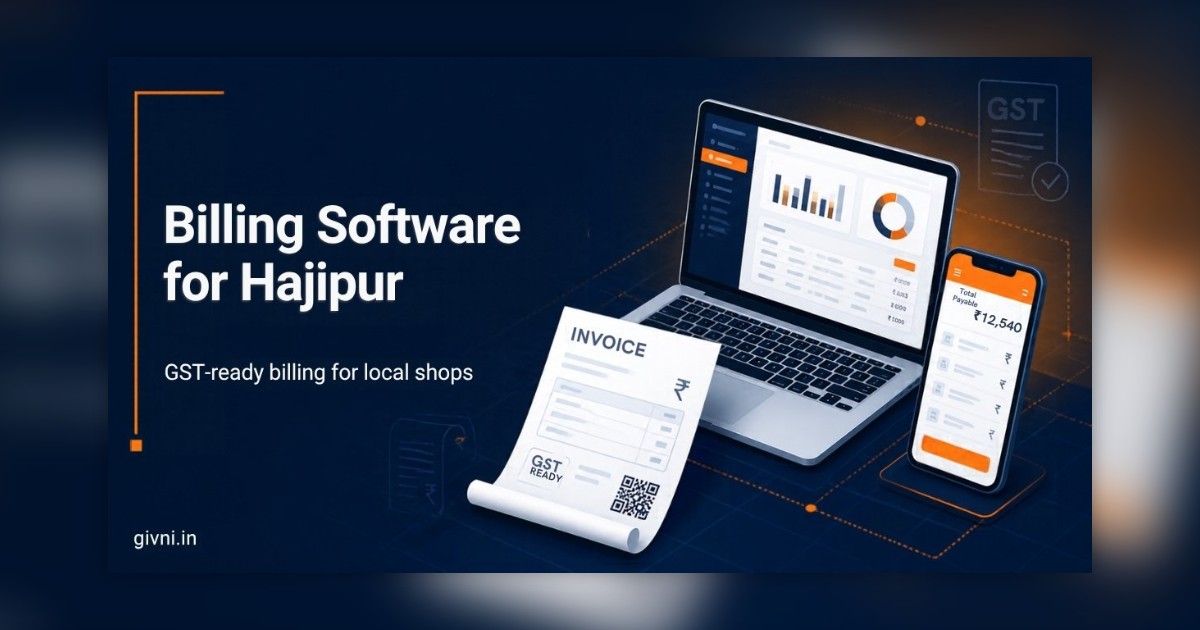
Hajipur sits just across the Ganga from Patna, and its economy reflects both closeness to the capital and its own strengths. The surrounding Vaishali area is known for its banana belt, the town has an established industrial area with manufacturing and food-processing units, and its markets serve a steady flow of local and Patna-bound customers. As these businesses grow, the way they handle invoices is changing too. This article looks at the trends shaping billing software in Hajipur in 2026, and what they mean in practical terms for traders, manufacturers and shop owners.
These are not predictions about any specific product. They are broad directions that most billing software, and most businesses using it, are moving towards.
Trend 1: Mobile-first billing
A few years ago, billing software meant a desktop computer at the counter. Today, more owners want to raise bills, check stock and see sales from a phone or tablet. For a banana or vegetable trader who does business at a mandi, a fruit wholesaler sending trucks to other cities, or a contractor billing from a site, mobile billing is not a luxury; it is the only practical option. Expect more businesses to use a mix: a desktop at the main counter and mobile apps for the owner and field staff.
Trend 2: Digital payments built into the bill
UPI is now part of daily life in Hajipur's markets. The next step is tighter connection between the bill and the payment. Many systems can print or share a QR code on the invoice, record whether a bill was paid by UPI, cash or card, and reconcile daily totals automatically. This reduces the evening confusion of matching cash in the drawer with UPI notifications on several phones.
Trend 3: WhatsApp as the default invoice channel
Customers increasingly expect their bill on WhatsApp rather than on paper. Businesses are using it to send invoices, payment reminders, order confirmations and statements of account. Billing software that can share a clean PDF invoice in one tap saves paper and makes it easier for customers to find their bill later. For wholesalers, WhatsApp reminders for outstanding payments are becoming a standard way to improve collections without awkward phone calls.
Trend 4: Deeper GST compliance features
GST compliance continues to evolve, and businesses above certain turnover levels face requirements such as e-invoicing and e-way bills. Even smaller businesses benefit from software that keeps HSN codes accurate, applies tax rates correctly and produces clean return-ready reports. In 2026, GST billing software Hajipur businesses choose should be kept updated by the vendor as rules change, rather than leaving owners to work out changes on their own.
Trend 5: Billing and inventory for small manufacturers
Hajipur's industrial area includes small and mid-sized manufacturing and processing units. These businesses increasingly want billing that links to basic production records: raw material stock, finished goods, job work and dispatch. Not every unit needs full ERP software, but many are looking for billing systems that can handle raw material consumption, batch production and finished goods inventory in a simple way.
Trend 6: Cloud backup as standard
Losing data to a crashed computer is becoming less acceptable. More businesses now expect their billing data to be backed up automatically to the cloud, even if they bill offline at the counter. Hybrid systems that work without internet and sync later are especially useful where connectivity varies.
Trend 7: Smarter reports, not more reports
Older software often offered dozens of reports that nobody read. The trend now is towards a few clear, actionable views: today's sales, top outstanding customers, items running low, slow-moving stock and month-on-month comparison. Some systems also add simple alerts, such as a notification when a customer crosses a credit limit or when a bill is deleted. Owners want answers, not spreadsheets.
Trend 8: AI-assisted features, used carefully
Artificial intelligence is starting to appear in business software in practical ways: suggesting reorder quantities based on past sales, flagging unusual transactions, reading purchase bills from photos to reduce typing, or answering simple questions like "which items sold most last month?" These features can save time, but they work best when the underlying data, meaning items, parties and stock, is clean. AI does not fix messy data; it amplifies it.
Trend 9: Connecting billing with online presence
More Hajipur businesses are building a website, listing on online maps or running social media pages. The next step is linking these with billing: a product catalogue that reflects actual stock, online orders that flow into the billing system, or customer lists that can be used for festival offers. Even if you are not ready for an online store, choosing billing software that can export clean product and customer data keeps that option open.
What these trends mean for choosing billing software in Hajipur
You do not need to chase every trend. Instead, use them as a checklist for future-proofing:
- Does the software have a usable mobile app?
- Does it support UPI QR codes and WhatsApp invoices?
- Does the vendor update it for GST changes?
- Can it grow from billing into inventory and basic production if needed?
- Is cloud backup available, with offline billing at the counter?
- Are the reports simple and useful?
If most answers are yes, your system is likely to stay useful for years rather than needing replacement as soon as your business grows.
Givni helps traders, manufacturers and retailers set up billing software in Hajipur that fits how they work today and leaves room for what comes next. If you are also thinking about your online presence, our digital marketing team can help connect the dots.
हिंदी में पढ़ें: हाजीपुर के लिए 2026 के billing trends
हाजीपुर, पटना से गंगा पार, अपने आप में एक मज़बूत बाज़ार है। वैशाली का केला बेल्ट, यहाँ का industrial area जिसमें manufacturing और food processing यूनिट हैं, और रोज़ के ग्राहकों से भरे बाज़ार – सब मिलकर इसे खास बनाते हैं। जैसे-जैसे कारोबार बढ़ रहा है, बिल बनाने का तरीका भी बदल रहा है। 2026 में billing software से जुड़े कुछ बड़े बदलाव समझ लीजिए।
1. मोबाइल से बिलिंग: पहले बिलिंग मतलब काउंटर का कंप्यूटर। अब मालिक फ़ोन से बिल बनाना, स्टॉक और बिक्री देखना चाहते हैं। केला या सब्ज़ी का व्यापारी मंडी में बैठकर, या ठेकेदार साइट से बिल बना सके – यही ज़रूरत है।
2. बिल में ही पेमेंट: UPI अब हर जगह है। बिल पर QR कोड, किस बिल का पेमेंट UPI से आया और किसका कैश से – ये अपने आप दर्ज हो जाए, तो शाम का हिसाब मिलाना आसान हो जाता है।
3. WhatsApp पर बिल: ग्राहक अब काग़ज़ की जगह WhatsApp पर बिल चाहते हैं। एक टच में PDF बिल, उधारी का reminder और खाते का statement – थोक वालों के लिए ये बहुत काम का है।
4. GST के नए नियम: बड़े कारोबार के लिए e-invoice और e-way bill ज़रूरी हैं। छोटे दुकानदारों के लिए भी सही HSN, सही टैक्स और साफ़ रिपोर्ट ज़रूरी है। ऐसा vendor चुनिए जो नियम बदलने पर software update करता रहे।
5. छोटे manufacturer के लिए: industrial area की यूनिटों को कच्चे माल, तैयार माल, job work और dispatch का आसान हिसाब चाहिए – बिना भारी ERP के।
6. Cloud backup: कंप्यूटर ख़राब होने पर data खोना अब मंज़ूर नहीं। काउंटर पर offline बिलिंग और बाद में cloud में backup – यही सबसे अच्छा तरीका है।
7. कम लेकिन काम की रिपोर्ट: दर्जनों रिपोर्ट की जगह अब कुछ साफ़ जानकारी – आज की बिक्री, सबसे ज़्यादा बकाया, कम स्टॉक, पड़ा हुआ माल। साथ में अलर्ट, जैसे कोई ग्राहक उधार की लिमिट पार करे या कोई बिल डिलीट हो।
8. AI वाले फ़ीचर: पुरानी बिक्री देखकर कितना माल मँगाना है, purchase बिल की फ़ोटो से अपने आप एंट्री, अजीब लेन-देन पर चेतावनी – ये सब आ रहा है। लेकिन याद रखिए, AI तभी काम करता है जब आपका data साफ़ हो।
9. Online से जुड़ाव: वेबसाइट, Google Maps, सोशल मीडिया – आगे चलकर इन्हें billing से जोड़ा जा सकता है, जैसे स्टॉक के हिसाब से product catalogue या online ऑर्डर सीधे बिलिंग में।
हर नए trend के पीछे भागने की ज़रूरत नहीं। बस software चुनते समय देखिए – मोबाइल app है? UPI QR और WhatsApp बिल है? GST update मिलते हैं? आगे स्टॉक और production तक बढ़ सकता है? Backup और offline बिलिंग है? रिपोर्ट आसान हैं? अगर इन सवालों का जवाब "हाँ" है, तो आपका software आने वाले सालों के लिए तैयार है।
Frequently Asked Questions
Is mobile billing reliable enough for daily use?
For many businesses, yes. Modern mobile billing apps can raise GST invoices, share them on WhatsApp and sync with a main system. Busy counters may still prefer a desktop or tablet for speed, with mobile used by owners and field staff.
Do small shops need e-invoicing?
E-invoicing applies to businesses above a certain turnover threshold set by the government, and these thresholds can change. Your accountant can confirm whether it applies to you; good billing software should support it when needed.
Can billing software help a small manufacturing unit?
Yes. Many systems can track raw material purchases, finished goods stock and sales invoices. For more complex production planning, a custom or ERP-style solution may be needed.
Are AI features worth paying for now?
They can save time, especially for reading purchase bills or suggesting reorders. But clean, well-organised data matters more. Focus on getting the basics right first.
Want billing software that is ready for 2026 and beyond? Call +91 98359 42411 or +91 94304 55055, email givniinfo@gmail.com, or contact Givni to talk about your Hajipur business.