
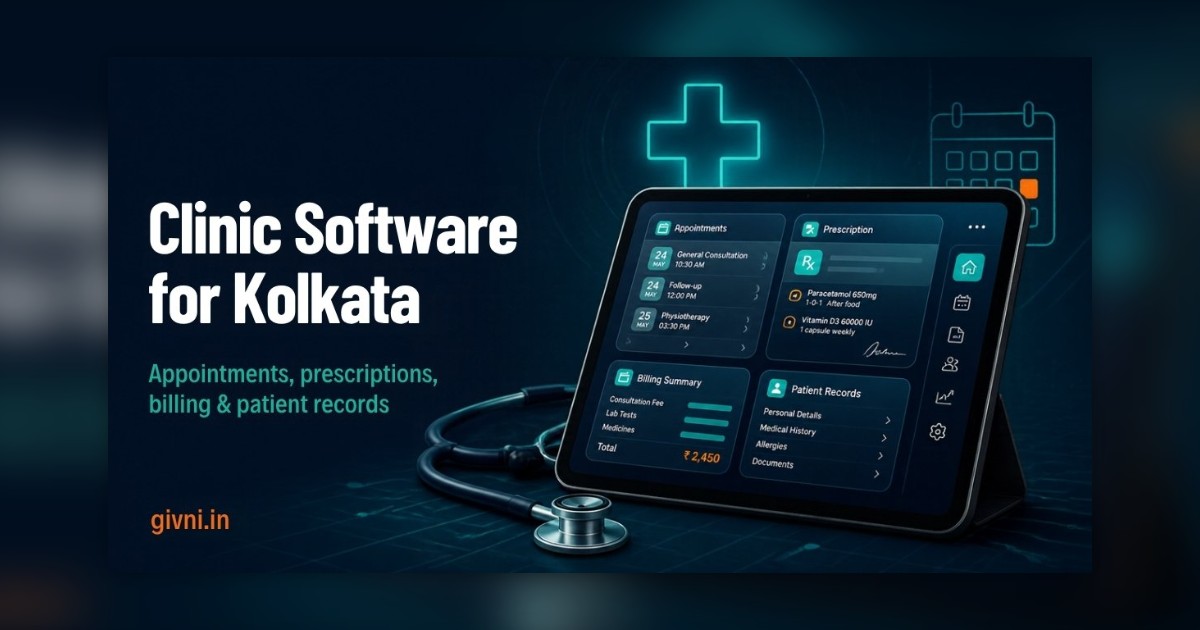
Walk into almost any busy polyclinic in Kolkata at 7 pm and you will see the same scene: a crowded waiting area, a receptionist juggling two phones, a register full of half-legible names, and a doctor asking for last month's report that nobody can find. Clinic management software in Kolkata exists to fix exactly this, but the market is full of products that promise everything and deliver a confusing dashboard. This guide skips the sales talk and looks at the twelve features that genuinely change how a Kolkata clinic runs day to day.
Whether you run a single-doctor chamber in North Kolkata, a multi-speciality polyclinic in Salt Lake, or a diagnostic-cum-consultation centre near a big hospital, use the list below to judge any product you are shown.
Why a Metro Clinic Needs More Than a Register
Kolkata is a metro, and metro patients behave differently. Many of them have consulted two or three doctors before reaching you. They expect a token number on WhatsApp, a printed prescription that the chemist downstairs can read, and a bill that clearly lists the consultation, the procedure and the tests. Visiting consultants who sit on fixed days add another layer of complexity. A paper register cannot keep up with this, and a generic spreadsheet breaks the moment two people edit it at once.
That is why the decision is less about "should we go digital" and more about "which features do we really need". Here they are, in the order most Kolkata clinics should evaluate them when comparing clinic software options.
The 12 Features of Clinic Management Software That Matter in Kolkata
1. Doctor-wise appointment calendar
Each doctor, including visiting consultants, should have their own calendar with their own slot length and days. The receptionist should see at a glance who is free at 6:30 pm on Thursday without flipping pages.
2. Token and queue display
A simple token system, ideally with a screen in the waiting area or a message on the patient's phone, removes most of the arguments at the front desk. Patients relax when they can see how many people are ahead of them.
3. Appointment reminders
SMS or WhatsApp reminders the evening before and on the morning of the visit typically reduce no-shows and help the clinic plan the day. Look for reminders that can be written in Bengali, Hindi and English, because your patient base in Kolkata is mixed.
4. A single patient record
Every visit, prescription, vital reading and uploaded report should sit under one patient ID that can be found by mobile number or name. Duplicate records are the biggest hidden mess in clinics, so check how the software prevents them.
5. Digital prescriptions
Doctors should be able to pick medicines from a list, use saved templates for common conditions, add advice and follow-up dates, and print a clean prescription with the clinic letterhead. The doctor stays in charge of every clinical decision; the software only makes writing faster and neater.
6. Billing that matches how you charge
Consultation fees, procedure charges, package rates, discounts for senior citizens or staff, and partial payments all need to be handled without workarounds. Receipts should be printable and shareable on WhatsApp, and the day-end cash and UPI summary should tally without a calculator.
7. Lab and diagnostic integration
If you have an in-house collection centre or a tie-up with a lab, test orders should flow from the prescription to the lab desk, and reports should come back into the patient record as PDFs instead of loose papers.
8. Pharmacy and inventory
Clinics with a dispensary or a small pharmacy need stock levels, batch and expiry tracking, and low-stock alerts. Even if you do not sell medicines, tracking consumables such as gloves and syringes saves money.
9. Role-based access
The receptionist does not need to see clinical notes, and a junior staff member should not be able to delete bills. Patient records privacy depends on giving each user only the access their job needs, along with a log of who changed what.
10. Reports for the owner
Daily collections, doctor-wise patient counts, referral sources, pending dues and follow-ups due this week. The owner of a Kolkata polyclinic should be able to see these on a phone without calling the clinic.
11. Cloud access with backups
Cloud-based clinic software lets doctors check a record from home or from another chamber, and it protects you from a crashed desktop. Ask where the data is stored, how often it is backed up, and how you can export it if you ever change vendors.
12. Readiness for digital health IDs
India's Ayushman Bharat Digital Mission (ABDM) and the ABHA health ID are gradually shaping how health records move between providers. You do not need to over-engineer for this today, but a vendor should be able to explain in general terms how their system can support ABHA-linked workflows as the ecosystem matures.
Features You Can Safely Skip at the Start
Not every module is worth paying for on day one. Smaller Kolkata clinics often get little value from complex insurance claim modules, bed management (unless you run a nursing home), or elaborate marketing automation. Start with appointments, records, prescriptions and billing, then add modules once your team is comfortable. Software that is switched on but never used is worse than no software, because staff start keeping a parallel paper register "just in case".
How to Test Clinic Management Software in Kolkata During a Demo
A good demo is not a slideshow. Ask the vendor to do the following live, using a dummy patient:
- Book an appointment for a visiting consultant next Tuesday and send a reminder.
- Check the patient in, generate a token and move them to the doctor's queue.
- Write a prescription with three medicines and a lab test, then print it.
- Create a bill with a discount and a part payment by UPI.
- Upload a lab report and find it again by searching the patient's mobile number.
- Show the day-end report on a mobile phone.
If any of these steps needs more than a few clicks or a "we will customise that later", note it down. Also ask your own receptionist to try the booking screen, because she will use it far more than you.
Where Givni Fits In
Givni is a Kolkata-headquartered IT company based in New Town, and we build hospital management software in Kolkata for clinics, polyclinics and nursing homes. Our approach is to start from your existing workflow, configure the modules you actually need, train your front desk and doctors, and stay available for support after go-live. If you also want more patients to find you online, our team handles digital marketing for clinics as well.
Whichever vendor you choose, insist on a live demo with your own scenarios, clear data-export terms, and training in the language your staff is comfortable with. The best clinic management software in Kolkata is the one your whole team actually uses every day.
हिंदी में पढ़ें: कोलकाता के क्लिनिक के लिए ज़रूरी features
कोलकाता में ज़्यादातर क्लिनिक की शाम एक जैसी होती है – वेटिंग एरिया भरा हुआ, रिसेप्शन पर दो-दो फ़ोन बज रहे हैं, रजिस्टर में नाम ठीक से पढ़े नहीं जा रहे, और डॉक्टर साहब पिछले महीने की रिपोर्ट माँग रहे हैं जो किसी को मिल नहीं रही। Clinic management software इसी परेशानी को दूर करने के लिए बना है। लेकिन बाज़ार में इतने सारे software हैं कि सही चुनना मुश्किल लगता है।
सबसे पहले यह समझिए कि आपको कौन-से feature सच में चाहिए। हर डॉक्टर का अलग appointment calendar होना चाहिए, ताकि visiting doctor के दिन और समय भी साफ़ दिखें। Token system से मरीज़ों को पता रहता है कि उनसे पहले कितने लोग हैं, और रिसेप्शन पर बहस कम होती है। SMS या WhatsApp पर appointment reminder जाने से मरीज़ समय पर आते हैं। कोलकाता में मरीज़ बांग्ला, हिंदी और अंग्रेज़ी तीनों बोलते हैं, इसलिए reminder कई भाषाओं में भेजने की सुविधा अच्छी रहती है।
हर मरीज़ का एक ही record होना चाहिए – पुरानी visit, prescription, BP-sugar जैसी readings और lab report, सब एक जगह, मोबाइल नंबर से तुरंत मिल जाए। डॉक्टर के लिए digital prescription में दवाइयों की list और templates हों, ताकि लिखना तेज़ और साफ़ हो। इलाज का फ़ैसला हमेशा डॉक्टर का ही रहता है, software सिर्फ़ काम आसान करता है।
Billing में consultation, procedure, package, discount और आधा-आधा payment सब आसानी से हो जाना चाहिए। दिन के अंत में cash और UPI का हिसाब अपने-आप मिल जाए। अगर आपकी dispensary है तो stock, batch और expiry की जानकारी भी ज़रूरी है।
मरीज़ों की जानकारी की privacy बहुत ज़रूरी है। रिसेप्शन वाले को clinical notes देखने की ज़रूरत नहीं, और हर बदलाव का log रहना चाहिए। Cloud software से डॉक्टर घर से भी record देख सकते हैं और कंप्यूटर ख़राब होने पर data सुरक्षित रहता है। आगे चलकर ABDM और ABHA health ID जैसी सरकारी digital health व्यवस्था भी बढ़ेगी, तो vendor से पूछिए कि उनका system इसके लिए कैसे तैयार है।
शुरुआत में हर module लेने की ज़रूरत नहीं है। पहले appointment, record, prescription और billing चालू कीजिए, बाकी बाद में जोड़िए। Demo के समय vendor से कहिए कि आपके सामने एक dummy मरीज़ का पूरा काम करके दिखाएँ – booking से लेकर bill और report तक। और अपनी रिसेप्शनिस्ट से भी screen चलवाकर देखिए, क्योंकि रोज़ वही इसे सबसे ज़्यादा इस्तेमाल करेंगी।
Givni का head office कोलकाता के New Town में है। हम क्लिनिक, polyclinic और nursing home के लिए software बनाते हैं, स्टाफ़ को training देते हैं और बाद में support भी देते हैं। आप चाहे किसी भी कंपनी से software लें, याद रखिए – सबसे अच्छा software वही है जिसे आपकी पूरी टीम रोज़ खुशी से इस्तेमाल करे।
Frequently Asked Questions
Is clinic management software only useful for large polyclinics?
No. Single-doctor chambers often benefit the most, because the doctor usually handles appointments, notes and billing with very little support staff. You can start with a basic plan and add modules later.
Can patients get reminders in Bengali?
Many systems let you write message templates in any language your patients prefer, including Bengali and Hindi. Ask the vendor to show a sample reminder during the demo.
Will the software decide treatment or medicines?
No. The software stores records and makes writing prescriptions faster, but every clinical decision stays with the doctor.
What happens to our data if we change vendors later?
Before signing, ask for written terms on data export, such as patient lists, visit history and bills in a standard format, so you are never locked in.
Ready to bring order to your OPD? Call Givni on +91 98359 42411 or +91 94304 55055, write to givniinfo@gmail.com, or contact Givni online. We are available Monday to Saturday, 9:30 am to 6:30 pm.