
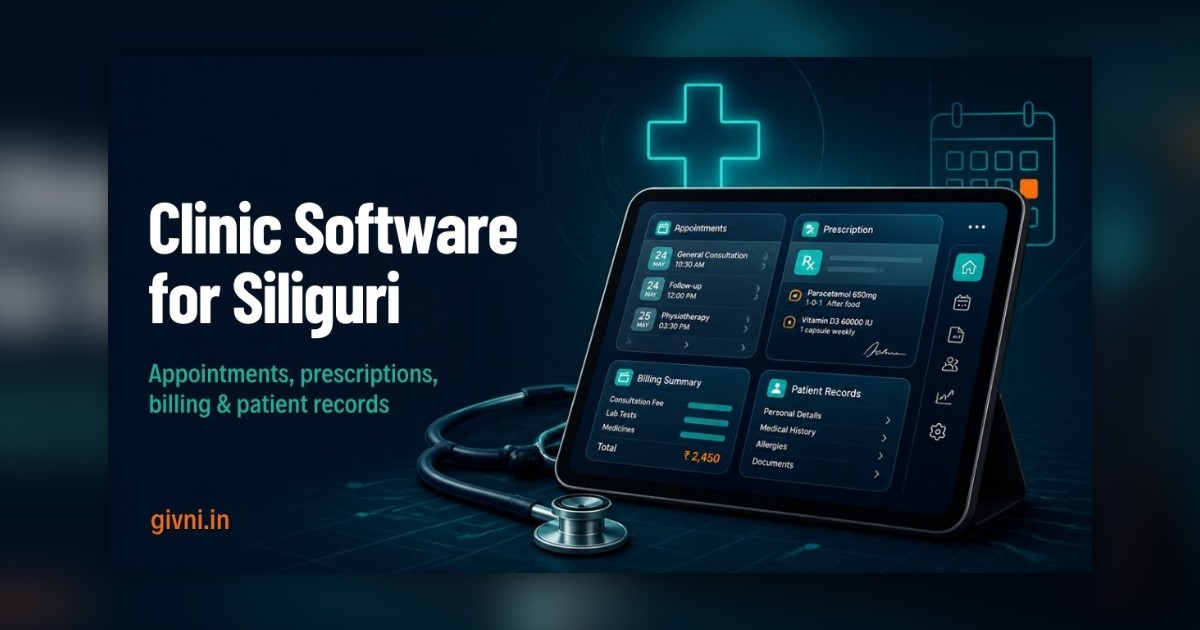
Siliguri sits at the meeting point of the hills, the plains and the North-East, and its clinics see patients who have travelled a long way to get there. Some come down from Darjeeling and Kalimpong, others from Sikkim, the Dooars tea gardens or across the state border. When a patient has spent half a day on the road, a lost file or a two-hour wait feels far worse. This is the story of how a typical Siliguri clinic changes once it adopts clinic management software in Siliguri, told as a before-and-after so you can judge whether the switch makes sense for you.
The clinic in this story is a composite, not a real business. It is a three-doctor practice with a general physician, a paediatrician and a visiting gynaecologist, plus a small sample collection counter. Many clinics in the town look roughly like this, and most clinic software in Siliguri is bought by practices of exactly this size.
Before: A Normal Monday at the Clinic
The day starts at 9 am, but patients from the hills began queuing at 8. The receptionist writes names in a long register and hands out paper slips. Two families argue over who came first. A patient from Kalimpong insists she booked by phone last week, but nobody wrote it down.
Inside, the physician asks for a patient's previous blood report. The receptionist searches a pile of files and finds the wrong one. The patient pulls a crumpled copy out of a plastic bag instead. The paediatrician writes prescriptions by hand, and the chemist across the road calls twice to check a dosage line he cannot read.
At the billing counter, consultation fees are noted in one book, sample collection charges in another, and UPI payments are checked on the owner's phone. At 9 pm the cash does not match the books, and the owner spends forty minutes finding a missing entry.
The visiting gynaecologist's patients are the hardest to manage. She comes on fixed days, and patients who forget the date travel from far away only to find she is not there. Follow-up visits are missed because there is no reminder system.
The Turning Point
None of these problems is dramatic on its own. Together, they cost the clinic its reputation slowly: patients start mentioning the waiting time and the confusion more than the doctors' skill. The owner decides to try clinic management software, but with a clear rule: it must make life easier for the receptionist first, not just produce nice reports for the owner.
After: The Same Monday, Three Months Later
Patients from the hills now book through a phone call or a WhatsApp message, and the receptionist enters it straight into the doctor's calendar. Each patient gets an automatic confirmation and a reminder the evening before, with the doctor's name and the time slot. For the visiting gynaecologist, reminders also go out a day before her clinic day, and missed visits drop noticeably.
On arrival, patients are found by mobile number in seconds. A token is issued, and a simple screen in the waiting area shows the current number for each doctor. Arguments about who came first mostly disappear because the system decides.
In the consultation room, the physician opens the patient's history on screen: previous visits, prescriptions, BP readings, and the lab reports uploaded by the collection counter. The paediatrician uses saved prescription templates, adjusts them for each child, and prints a clear typed prescription. The chemist's phone calls stop.
Billing happens in one place. Consultation, sample collection and any procedure appear on a single bill, payments are marked as cash or UPI, and the receipt goes to the patient's WhatsApp. At 9 pm, the day-end report balances in a few minutes.
What Actually Made the Difference
It is tempting to credit the software alone, but in most clinics the result depends on a few decisions made during the rollout:
- Starting small. The clinic turned on appointments, patient records and billing first. Pharmacy stock and detailed reports were added only after a month.
- Training the front desk properly. The receptionist got hands-on practice with dummy patients before going live, and a printed one-page guide stayed next to her computer.
- Entering old patients gradually. Instead of typing years of files in one go, regular patients were added to the system as they visited.
- Reminders in the right language. Messages were written in simple English, Hindi, Bengali and Nepali, because the patient base in and around Siliguri is mixed.
- Reliable internet with a backup. A mobile hotspot was kept ready for the days the broadband goes down, which matters in a town where weather can disrupt connections.
Is Clinic Management Software Right for Your Siliguri Practice?
Ask yourself a few honest questions. Do patients regularly travel more than an hour to see you? Do you have visiting doctors on fixed days? Do you spend time every night reconciling money? Do you lose track of follow-ups? If you said yes to two or more, a well-chosen system will likely save time for both your team and your patients.
It is equally important to know what software will not do. It will not fix a shortage of staff, it will not make clinical decisions, and it will not work if the team keeps a parallel paper register out of habit. Patient records privacy also becomes your responsibility in a new way: you must decide who can see what, use strong passwords, and make sure backups are taken.
Finally, keep an eye on the bigger picture. India's ABDM programme and ABHA health IDs are gradually making it easier for patients to carry their records between providers. A good vendor should be able to explain, in plain words, how their system can fit into that future.
Choosing Clinic Management Software in Siliguri With a Local Partner
Givni builds hospital management software in Siliguri for clinics, nursing homes and diagnostic centres, and our team can help you set up multilingual reminders, train your staff and move your existing records in phases. Whichever partner you choose, ask for a live demo using a scenario from your own Monday morning; that single test will tell you more than any brochure.
हिंदी में पढ़ें: सिलीगुड़ी के एक क्लिनिक की कहानी
सिलीगुड़ी के क्लिनिक में मरीज़ बहुत दूर-दूर से आते हैं – दार्जिलिंग, कालिम्पोंग, सिक्किम, डुआर्स के चाय बागान और आसपास के इलाक़ों से। जब कोई मरीज़ आधा दिन सफ़र करके आता है और यहाँ उसकी फ़ाइल नहीं मिलती या दो घंटे इंतज़ार करना पड़ता है, तो उसे बहुत बुरा लगता है।
पहले एक आम क्लिनिक की तस्वीर सोचिए। सुबह से लाइन लगी है, रिसेप्शन पर रजिस्टर में नाम लिखे जा रहे हैं, कोई कहता है "मैंने तो फ़ोन पर booking की थी" पर कहीं लिखा नहीं मिलता। डॉक्टर पुरानी रिपोर्ट माँगते हैं, फ़ाइलों के ढेर में ग़लत फ़ाइल निकलती है। हाथ से लिखी prescription chemist पढ़ नहीं पाता। रात को cash और UPI का हिसाब मिलाने में आधा-पौना घंटा लग जाता है। Visiting doctor के मरीज़ ग़लत दिन आ जाते हैं, क्योंकि उन्हें कोई याद नहीं दिलाता।
अब वही क्लिनिक clinic management software लगाने के तीन महीने बाद देखिए। मरीज़ फ़ोन या WhatsApp पर booking करते हैं, और रिसेप्शनिस्ट सीधे डॉक्टर के calendar में entry कर देती हैं। मरीज़ को confirmation और एक दिन पहले reminder अपने-आप चला जाता है। आने पर मोबाइल नंबर से record तुरंत मिल जाता है, token मिलता है और screen पर नंबर दिखता है। झगड़े लगभग ख़त्म।
डॉक्टर के सामने मरीज़ की पूरी history होती है – पुरानी visit, दवाइयाँ, BP और lab report। Prescription साफ़ छपी हुई निकलती है। Billing एक ही जगह होती है और receipt मरीज़ के WhatsApp पर चली जाती है। रात का हिसाब कुछ ही मिनटों में मिल जाता है।
लेकिन यह फ़र्क सिर्फ़ software से नहीं आया। क्लिनिक ने शुरुआत छोटी रखी – पहले appointment, record और billing। रिसेप्शन स्टाफ़ को dummy मरीज़ों पर अच्छी practice कराई गई। पुराने मरीज़ों का data एक साथ नहीं, बल्कि धीरे-धीरे जब वे आए तब डाला गया। Reminder हिंदी, बांग्ला, नेपाली और अंग्रेज़ी में भेजे गए। और internet बंद होने पर mobile hotspot तैयार रखा गया।
यह भी समझ लीजिए कि software स्टाफ़ की कमी पूरी नहीं करता और इलाज का फ़ैसला हमेशा डॉक्टर ही करते हैं। मरीज़ों के data की privacy आपकी ज़िम्मेदारी है – मज़बूत password, सही access और नियमित backup ज़रूरी हैं। आगे ABDM और ABHA health ID जैसी व्यवस्थाएँ भी बढ़ेंगी, तो vendor से इसके बारे में भी पूछिए।
अगर आपके मरीज़ दूर से आते हैं, visiting doctor बैठते हैं, या रोज़ रात हिसाब मिलाने में समय जाता है, तो एक अच्छा software आपके लिए फ़ायदेमंद हो सकता है। Givni सिलीगुड़ी के क्लिनिक और nursing home के लिए setup, training और support देता है।
Frequently Asked Questions
Can reminders be sent in Nepali as well as Bengali and Hindi?
Most systems let you write your own message templates, so you can use whichever languages your patients read. Test a few messages with real patients before rolling them out widely.
What if internet connectivity is poor on some days?
Keep a mobile hotspot as backup and ask the vendor how the software behaves on a slow connection. Some systems also allow limited offline entry that syncs later.
Do we need to enter all our old patient files before starting?
No. Most clinics add regular patients gradually as they visit, and scan only the most important older reports.
How long does training usually take?
Front-desk staff typically need a few focused sessions plus a week or two of supervised daily use. Doctors usually learn the prescription screen faster.
Want to talk through your clinic's workflow first? Call +91 98359 42411 or +91 94304 55055, email givniinfo@gmail.com, or contact Givni through our website (Monday to Saturday, 9:30 am to 6:30 pm).